
Field Guide
What counts as high THC?
TL;DR: "High THC" depends on the product. For flower, it usually means testing toward the top of today's market — roughly 25% and up. For vapes and concentrates, the scale shifts entirely: extraction concentrates the plant, so oils commonly run 60–90%+. The number matters, but terpenes, freshness, format, and your own tolerance shape the experience just as much.
The THC percentage is the first thing most of us look at on a label — it's big, it's comparable, and it feels like a strength score. Sometimes it is. But that number means very different things on a jar of flower than it does on a vape cart, and chasing the biggest one on the menu isn't always the path to the best night. Here's how to actually read it.
What the percentage really measures
THC percentage is potency by weight: how much of the product's total weight is THC-related compounds. On flower, that number is measured against everything in the bud — plant material, moisture, terpenes, other cannabinoids. On concentrates, most of that non-active material has been removed, so THC naturally makes up a much bigger share of what's left.
That's the single most useful thing to understand: flower and concentrates don't live on the same scale. A 25% flower and a 90% cartridge aren't a 3.6x difference in experience — they're different formats built on different foundations.
One more label detail worth knowing: raw flower mostly contains THCa, which converts to THC when heat is applied. "Total THC" is the estimate of what's available after heating — so if one label shows total THC and another shows delta-9 THC alone, you're not comparing the same number.
High THC in flower
Most flower on Connecticut shelves today tests in the high teens to mid-twenties. In everyday dispensary language:
- High teens to ~20% — approachable, versatile, plenty strong for most sessions
- 20–25% — noticeably more intensity; where regulars tend to shop
- 25%+ — what most people mean by "high-THC flower"
Genetics, growing conditions, harvest timing, and curing all move that number — which is why the same strain can test differently batch to batch. It's a range indicator, not a precision instrument.
High THC in vapes & concentrates
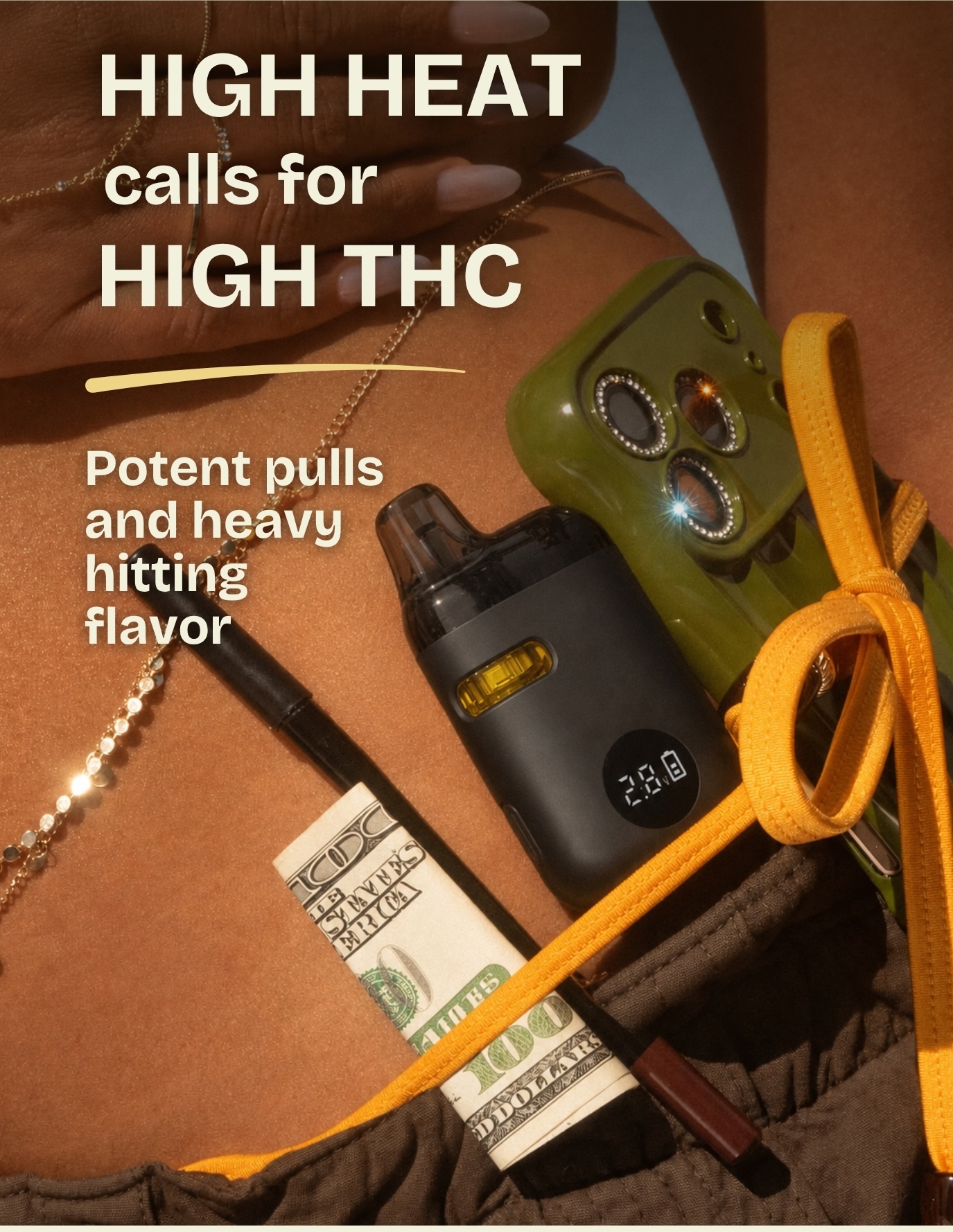
This is where the numbers get dramatic — and it's math, not marketing. Because extraction strips away most of the plant material, oils commonly test between roughly 60% and 90%+. On our menus you'll regularly see live resin vapes and cartridges in the high 80s and low 90s.
Format matters here too. Live resin is made from fresh-frozen plants, so it keeps more terpenes — big flavor and character alongside the potency. Distillate is refined for purity and consistency, then usually re-flavored with terpenes. Curious about the difference between extraction styles? We wrote a whole guide: Live resin vs. rosin →
The % isn't the whole story.
Terpenes, freshness, format, and your tolerance shape the ride as much as the number does.
What the number doesn't tell you
- Terpenes. The aromatic compounds behind flavor and feel. Two products with near-identical THC can land completely differently because of them.
- Your tolerance. "Strong" is personal. A cart that's intense for one person is a Tuesday for another — and your own tolerance moves over time.
- How you consume. Inhalation comes on in minutes; edibles take much longer and build differently. Concentrates tend to arrive faster and more fully than flower.
- Freshness. Heat, light, and time degrade cannabinoids and terpenes. A fresh batch at a sensible potency often beats an old jar with a bigger number.
Choosing your level (without overthinking it)
Newer to it? Pick formats that are easy to pace — lower-testing flower or a balanced vape — and treat the first session as a calibration, not a race. Comfortable already? Compare terpene profiles and formats instead of just chasing the top number. Experienced? You already know: consistency beats bragging rights.
And the phrase you'll hear from every good budtender because it's true: start low, go slow. One small pull, a few minutes of patience, then decide. If you ever overdo it — water, a calm spot, a snack, and time are your friends; it passes.
Why buy high-THC products from a licensed shop
As potency climbs, trustworthy information matters more. Everything on a licensed Connecticut dispensary shelf is lab-tested, labeled, and screened — so the number you're reading has real context behind it. And at any of our five shops (Bridgeport, Hamden, Killingly, New London, and Torrington), a budtender can translate the label into a real recommendation: what's fresh, what's flavorful, and what actually fits how you want to feel.
High-THC FAQs
What's considered high THC for flower?
Roughly 25% and up — the top of today's typical market range.
What's considered high THC for vapes and concentrates?
Oils commonly run 60–90%+; anything around 90% is high even by concentrate standards. Don't compare it 1:1 to flower numbers.
Is a higher percentage always stronger?
No — terpenes, format, freshness, and your tolerance all shape the experience. Similar numbers can feel very different.
THC vs. THCa on the label?
THCa converts to THC when heated; "total THC" estimates the potency after heating. Check which one you're reading before comparing.
Best way to try something strong for the first time?
Start low, go slow: one small pull, wait a few minutes, adjust. Ask your budtender to match potency to your experience level.
Ready to browse the strong stuff?
Every Higher Collective menu can be sorted by potency — or just ask a budtender what's testing high and tasting great this week.
Find your shop →21+ only. For use by adults in Connecticut. Keep out of reach of children. Do not drive under the influence.